Friday, October 2, 2020

Kremlin Campaign against Yury Dmitriyev ‘an Unbridled Dance of Evil,’ Khmelnitskaya Says

Paul Goble

            Staunton, September 30 – The Russian government’s campaign against Yury Dmitriyev, a Karelian investigator who has worked to identify the victims of Stalin’s great terror came to a head this week when his sentence was increased from 3.5 years in prison to 13 years, likely life imprisonment for a man of his advanced age, Yekaterina Khmelnitskaya says.

            Dmitriyev has thus become, the Sakharov Center psychotherapist says, the victim of repressions which took place 80 years ago that the current regime is trying to cover up and get people to forget. To that end, the powers that be have engaged in “an unbridled dance of evil” (vtimes.io/news/dmitriev).

            The man who grew up in an orphanage has had his family destroyed and the life and psyche of his daughter has been destroyed by a legal system that has completely discredited itself because its own experts disowned the charges the political authorities brought against him. Even though Russian courts rarely bring back findings of innocence, they did so twice in his case.

            But the authorities continued to pursue a man whose only crime was to want to bring to public notice the crimes that had been visited upon the people in his republic and elsewhere during Stalin’s times, crimes that the current Russian government cannot bear that anyone be honest about.

            In June, a judge in Dmitriyev’s case handed down the minimum sentence. The accused should have been found innocent and let go, but his action gives some hope, Khmelnitskaya says, because it is possible that “we now are observing the passive resistance of simple judges who do not want to be tools of the authorities and aren’t ready to approve absurd cases.

            But the political authorities could not stand that possibility and pursued Dmitriyev to a higher court to ensure that he would be put away probably forever so that they could silence him in the way they have silenced so many others. And this week, they got their way, horrifying Russians who care about their country and about the truth.

            Of course, this decision isn’t the end of Dmitriyev’s case, legally or politically. Memorial has already announced plans to appeal the case up to the European Court for Human Rights. “There victory is guaranteed, although the question remains as to whether the case will be taken up in priority order,” the psychotherapist says.

            Tragically, Dmitriyev won’t be freed “neither in November nor in the coming months.” In the worst case, this appeal may not lead to a decision even within a year. And then Moscow may behave as it has done so often and ignore the findings of the European Court, Khmelnitskaya says.

            “The moral capital of this case and of Yury Dmitriyev personally is enormous and indisputable,” she says. Until the authorities went after him, he was known only among historians and specialists. Now, in yet another example of their counter-productive activities, he and the Sandarmokh killing fields are known to the entire world.

            In the coming months and years, Western leaders are likely to raise his case with Moscow officials much as they did for Soviet dissidents in the final decades of the USSR. And that will ensure that the Kremlin’s coverup will fail because ever more people will learn the truth about the past Russia’s current rulers see themselves as the heirs to.

            That is one of the political consequences of Moscow’s campaign against Dmitriyev. Another is this: the way the Kremlin has chosen to handle him is “a symptom of the transition of the regime to a qualitatively new phase, when propaganda despite its disgusting presence, no longer produces the necessary effect and gives way to an escalation of repression.”

‘Vitebsk Peoples Republic,’ a Donbass-Type Movement in Belarus, has Existed Since 2017

Paul Goble

            Staunton, September 30 – For three years, a group in Belarus which seeks to form ‘a Vitebsk Peoples Republic’ on the model of the DNR and LNR in Ukraine’s Donbass and to join the Russian Federation has been operating largely in the shadows. In the current crisis, some of its leaders are now assuming a more public role.

            One of them, speaking on condition of anonymity, told Aleksey Polorotov of The Daily Storm that “we have regions bordering Russia which are only juridicaly part of Belarus. In fact, we are Russia. Our business is focused on Russia, and our people regularly go there” (dailystorm.ru/vlast/po-zavetam-donbassa-vitebskaya-narodnaya-respublika-prositsya-v-rossiyu).

            The group is not registered with the authorities but exists as a network, and its representative says that “there are more of us than you think and volunteers from Russia are ready to come out on our side.” He adds that there are more than 100 military units ready to fulfill tasks when they are told to do so.

            And he adds, contrasting his group with the protesters in Belarusian cities, “power and the realization of ideas are not achieved by marches; they must be taken by force.” That is why he says his group came into existence and what it intends to do when the moment is ripe. That moment has not yet come.

            “What is needed,” he continues, “is real dual power, not the situation that exists now. When a crowd of protesters will try to remove Lukashenka and introduce Tichanovskaya, that will be the most suitable moment.” The situation must constantly be monitored and “Russia must have a clear understanding of what Belarus is.” 

            If the people in the streets come to power, they will work against Russia whatever they now say. That may seem absurd – “how can Belarusians be against Russia?” – but it isn’t funny. That is how things will evolve, but “we, eastern Belarusians, are focused on Russia. There is our home.”

            To prevent things from going too far in a pro-Western position, he says, “the East will be ours, but we need all of Belarus. Splitting it apart has no sense. Personally, we are monitoring the pulse in our native Vitebsk. But our comrades in arms are also in Homel and Mohylev.” And they will follow.

            He admits that he and those in his group were inspired by “the Russian spring” in the Donbass in 2014 and not by groups like Russian National Unity and the Movement Against Illegal Immigration that affected people earlier. And he says he hopes that Moscow will be more responsive to his movement than it has been to the DNR and LNR.

            When the time comes, he says, “the executive committees, the interior ministry, the KGB, the investigative committee and so on will all be taken in our hands, and with the arrival of support from Russia we will form new organs of power.” Once that happens, we will organize a referendum to allow us to join the Russian Federation.

            Because of their own experiences, Polorotov says, Ukrainian experts are more concerned about this phenomenon than most Belarusians. Viktor Taran, a Kyiv political analyst, accuses Moscow of organizing the Vitebsk group to destabilize the situation in Belarus and allow Russia to intervene under cover of an invitation.

            “Doesn’t this remind you of something? The Vitebsk Peoples Republic is a child of the FSB, and Russia is preparing for a massive intervention. We are very carefully following events in Belarus and the Vitebsk Peoples Republic,” the Ukrainian analyst continues.

            One supporter of the VPR in Russia says that he fought in the Donbass and is ready to help his comrades in Belarus. That we have lost Ukraine is bad, but we must not hand over Belarus to our enemies … We are Russians and we don’t hand over our own.” The VPR activists are counting on that.

Two-Thirds of Russians Say They are Poorer than They Are, Gimpelson and Chernina Report

 Paul Goble

            Staunton, September 30 – Poverty is both an objective measure and a subjective one, with the latter being the driver of people’s responses to their situation. In Russia today, two-thirds of people think they are poorer than they in fact are while one in five things he or she is richer. Only 11 percent rate their status accurately, Vladimir Gimpelson and Yevgeniya Chernina say.

            The two Higher School of Economics specialists reached that conclusion after comparing the real as opposed to self-assessed standing of 16,000 Russians as to which decile of the population they were members (“Position on the Scale of Incomes and Its Subjective Conception,” Zhurnal Novoy ekonomicheskoy assotsiatsii 2 (2020): 30-56 at publications.hse.ru/articles/376194026; summarized at iq.hse.ru/news/403243564.htm).

            They found that only 4.7 percent of the population believes they are in the bottom decile although ten percent are, that only 10 percent put themselves in the sixth to tenth decile and not the 50 percent who are actually there, and that 70 percent identify themselves as being member of the third, fourth and fifth deciles, that is, in the middle or just below.

            The average divergence of the difference between real and actual incomes was two deciles, but 22 percent got their status wrong by as many as five, the result of the impact of comparisons they make on the basis of residence, age, health, education and income, in these statistics drawn from 2016.

            High income inequality is a threat to social stability, Giimpelson and Chernina say; but it is self-assessed inequality rather than real income inequality that is the driver. If people are worse off than they believe, the situation may be more stable than if they are better off than they think.

            And they say that their findings are a warning not to conclude that when objective inequality rises or is greater than elsewhere that there necessarily will be more social and political conflicts. How these differences emerge and what governments can do to promote or limit them remain as yet unclear.


Thursday, October 1, 2020

Ingush Head Says He Relies on Outsiders Because ‘They have No Relatives’ in the Republic

 Paul Goble

            Staunton, September 30 – Makhmud-Ali Kalimatov, who spent much of his career outside of his native Ingushetia before becoming its head a year ago, says that in many cases, he has chosen other outsiders to work in his government because “they don’t have any relatives here.”

            Many Ingush have criticized him for being an outsider and even more others he has brought in, seeing them as unsympathetic to the concerns of the Ingush nation. But in an interview with Interfax, Kalimatov chose to defend his approach (interfax-russia.ru/south-and-north-caucasus/exclusives/glava-ingushetii-mahmud-ali-kalimatov-respublike-neobhodimo-umenshat-zavisimost-ot-dotacionnosti).

            He said it is critically important to choose people on the basis of experience and professionalism and that the commission he set up to do that has reviewed the cases of 4,000 individuals, out of which he has appointed “about 70.” Kalimatov said that his cadres policy was also intended to lower the average age of officials in Magas.

            Many Ingush will see this as insulting and further evidence that Kalimatov is simply Moscow's agent rather than their representative, and they will be angered by his youth agenda given that Ingush society is based on deference to the older and more experienced. Getting rid of such people and bringing in outsiders will do nothing to win him support.

            The republic head talked about a wide variety of issues, including the upcoming celebration of the 250th anniversary of the inclusion of Ingushetia into the Russian Empire, reducing its dependence on Moscow by increasing tax collections and cutting the budget, and working to provide enough pre-school institutions and eliminate two-shift schools.

            In addition, he said he is working to overcome unemployment, which now stands at 32 percent, the highest of any federal subject, to boost incomes by promoting small and mid-sized businesses and improve housing and communal services such as the delivery of pure water to residents.

            What he was not asked about and did not mention is the issue that cost his predecessor, Yunus-Bek Yevkurov, his position, the giving away to Chechnya of 10 percent of the republic’s lands, and that has roiled the Ingush nation in the months since, with a show trial now in prospect of seven activists the powers that be have identified as “extremist” leaders.

Moscow’s Attempt to Discredit Khabarovsk Protesters by Pointing to Their Ukrainian Background Backfiring, Sidorov Suggests

Paul Goble

            Staunton, September 30 – Russian propagandists always try to find a “foreign trace” behind any protest, usually linking demonstrations to foreign intelligence services. But sometimes, they seek to link popular actions to nations that are now independent of Russia but once were part of it.

            That is what has happened with regard to the continuing anti-Moscow protests in Khabarovsk, according to Vadim Sidorov, a Russian journalist. The current powers that be have sought to explain the rise and tenacity of protests in that Far Eastern city by pointing to the fact that it was once largely Ukrainian rather than Russian (sibreal.org/a/30864622.html).

            In that way, the Russian propagandists hoped to discredit the actions of the people of Khabarovsk by suggesting that they are not “real Russians.” But their attempts have backfired as they have called the attention of people in that region to their genuinely Ukrainian past and ensured that people in Ukraine have paid more attention to what is going on in Khabarovsk. 

            “The Far East, which today is considered an inalienable part of Russia was joined to it only in the middle of the 19th century, Sidorov says; and the population of this kray was formed by migration from the European portion of the Russian Empire,” mostly Ukrainians but also Belarusians and some Russians.

Russian commentators have not ignored these other flows in their discussions of the demography of Khabarovsk, but they have not used this in the same way as Moscow has used the Ukrainian dimension. (On this, see windowoneurasia2.blogspot.com/2020/08/khabarovsk-and-belarus-have-more-in.html.)

Most of the Ukrainians who came to the Far East settled in Yuzhno-Ussuriysk kray and “unofficially,” Sidorov says, the region began to be called “the Green Wedge,” “wedge” because that is what land subdivisions were called and “green” because of the extraordinarily fertile land in that region.

Ukrainians resettled in many parts of what is now Russia and those places too came to be known as “wedges,” although of different colors. Because of concerns about their reliability, Moscow has sought to suppress these memories (windowoneurasia2.blogspot.com/2016/06/a-real-wedge-issue-ukrainian-regions-in.html, windowoneurasia2.blogspot.com/2014/06/window-on-eurasia-zelenyi-klin-isnt.html and afterempire.info/2017/09/08/zeleni-klin/, as well as the sources cited therein.)

The Ukrainian arrivals settled overwhelmingly in rural areas, recapitulating the demographic situation of their homeland, in which they overwhelmingly dominated the rural peasantry three to one over Russians and others but typically formed fewer than three percent of the residents of urban areas, Sidorov continues.

By 1923, he says, the ethnic Ukrainians outnumbered the ethnic Russians 39 percent to 31 percent, a pattern that helped explain the outcome of the Russian Civil War there and why initially Moscow deferred to the Ukrainians as allies against anti-Bolshevik Great Russian chauvinists.

Until 1905, the tsarist regime prohibited Ukrainians from forming public organizations or publishing newspapers and journals. But after that time, the Ukrainians of the Zeleny klin, often with assistance from Ukrainians in Harbin founded some 400 publications and organizations which existed until the early Soviet years.

The Ukrainians in the Far East welcomed the February 1917 revolution, organized a series of congresses, and sought to interest Kyiv in 1918 to recognize them as “a Ukrainian colony” in the Far East. They sent a delegation to General Skoropadsky but because he had more immediate concerns, he took no action.

The establishment of Soviet power in the region “became a turning point” for the Ukrainians. The Bolsheviks turned on their former allies and began to repress them, leading to a show trial in Chita in 1924. (On that remarkable event, see Ivan Svit’s The Trial of Ukrainians in Chita (in Ukrainian, London, 1964, 38 pp., a bibliographic rarity.)

After that, the life of Ukranians in the Far East became far more difficult. Their national districts and schools were closed, their publications suspended, and they were forcibly reidentified as Russians. Between 1931 and 1989, Sidorov relates, the share of Ukrainians in the population there fell from 27 percent to eight percent. Since 1991, it has fallen to three percent.

On the one hand, as Sidorov says, the Ukrainians “have no more relationship to the protests in Khabarovsk than do the indigenous peoples of the Primorye region. But many of the Russians in the region have Ukrainian roots and share Ukrainian values (windowoneurasia2.blogspot.com/2018/06/historical-memory-of-ukrainian-wedge-in.html and windowoneurasia2.blogspot.com/2018/03/ukrainians-in-russian-far-east-aging.html).

That helps to explain why Khabarovsk residents have proved so steadfast. It is also why Moscow is making a serious mistake by calling attention to it.

Anyone Slated to Meet Putin Will First Have to Quarantine for Two Weeks, Media Watchdog Says

 Paul Goble

            Staunton, September 30 – Citing sources in the Kremlin, the media watchdog group, Project Media, says that no one will be allowed to meet Vladimir Putin face-to-face unless he or she has undergone a two-week quarantine to ensure that visitors won’t infect him with the coronavirus (proekt.media/narrative/vaktsina-koronavirus/#blat).

            The Kremlin issued a non-denial denial saying that decisions about who would have to undergo such quarantines would be made on a case-by-case basis. If the individual comes from a place or agency where there are many cases, a quarantine will be required; if not, then it won’t be (interfax.ru/russia/729325).

            These reports underscore what many had assumed up to now: that the Kremlin leader hasn’t been vaccinated or doesn’t trust the Russian vaccine he is calling on Russians to get and that he will remain largely “in the bunker,” as Russians have taken to describing his approach since the pandemic began.

            The pandemic continues to ebb and flow across Russia, hitting Moscow and other major urban centers especially hard and forcing officials in those locations to reverse some recent re-openings (regnum.ru/news/society/3077734.html). For Russia as a whole, the authorities registered 8431 new infections and 177 new deaths, bringing the totals for those categories respectively to 1,176,286 and 20,722 (t.me/COVID2019_official/1612).

            Putin spokesman Dmitry Peskov said that Moscow’s priorities were not to shut down the country again but rather improve the medical system to respond to new infections, a claim that many dismissed given new closures including a near total shutdown in Kaliningrad and warnings that more limitations are ahead from other officials (regnum.ru/news/3077816.html, regnum.ru/news/3078224.html and regnum.ru/news/3078079.html).

Moreover, there have been more moves to enforce mask wearing, including bringing in the Russian Guards to help local police in some cities (regnum.ru/news/3077999.html), and in another sign fuller closures may be ahead, MosKontsert stopped selling tickets for shows in October (novayagazeta.ru/news/2020/09/30/164605-moskontsert-zamorozil-prodazhu-biletov-na-meropriyatiya-s-1-po-31-oktyabrya).

Given dramatic rises in the number of coronavirus infections among school children in recent weeks and the fact that the authorities are inclined to blame the spread of infections to their parents and hence the spike in overall numbers, ever more places are going over to distance learning, despite promises that this would not happen (regnum.ru/news/society/3072297.html, regnum.ru/news/3077794.html and ura.news/articles/1036281199).

The situation in Moscow is  particularly dire and officials there have ordered all teachers over the age of 65 to conduct instruction only via distance learning and in no case face-to-face with their pupils (novayagazeta.ru/articles/2020/09/29/87293-vse-pod-kontrolem-vse-rastet and tass.ru/interviews/9594555).

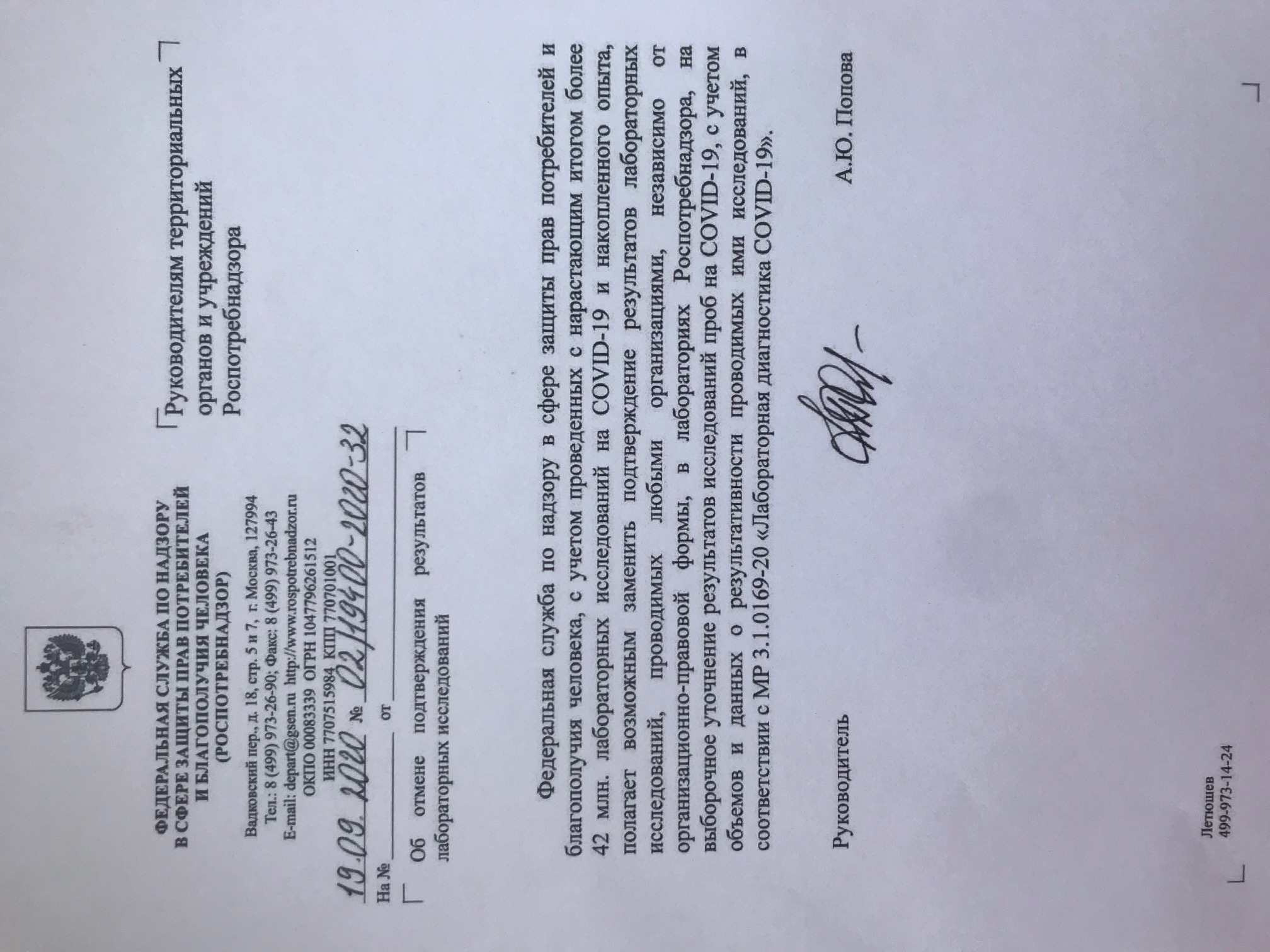
Today, Russian officials registered the second Russian coronavirus vaccine, the one prepared by Vektor Labs and allowed it to expand its testing regime (regnum.ru/news/3078009.html). Also today, Moscow announced officials would no longer check on all tests performed by private laboratories but only do so selectively (fedlab.ru/New Folder/роспотребнадзор.jpg).

And following the release of a new list of vaccines that will be free of charge to Russians, many began asking whether a coronavirus one would be added as it is not now on the list (meduza.io/cards/pravitelstvo-rossii-reshilo-sdelat-bolshe-privivok-besplatnymi-kakie-imenno-privivka-ot-koronavirusa-v-spiske-est).

On the economic front, a new study predicted that 39 percent of Russian companies would not survive a repeat of the coronavirus shutdown resembling the one last spring (rbc.ru/rbcfreenews/5f7226489a79477c787a89c0), and the Just Russia Party pressed for a credit holiday to help Russians recover (regnum.ru/news/3077816.html).

Meanwhile, in other pandemic-related developments in Russia today,

·         Moscow economist Igor Nikolayev said that the saddest aspect of the pandemic in Russia today is that had the government acted more forcefully and consistently, Russia would not be suffering now as it is (echo.msk.ru/blog/nikolaev_i/2717141-echo/).

·         Despite the epidemiological disaster that Ingushetia is, officials there say they will not delay the celebration of the 250th anniversary of Ingushetia’s joining Russia (fortanga.info/2020/09/korona-prazdnik/).

·         And in a sure sign that the pandemic is serious, Russians are engaging in black humor about it. Two of the best anecdotes involve Moscow Mayor Sergey Sobyanin. In one, he “recommends elderly Muscovites not to distance themselves from cemeteries;” and in a second, he says that “there will not be a second wave of the coronavirus; instead, a third wave will begin immediately!” (maximonline.ru/humor/_article/luchshie-shutki-pro-vozobnovlenie-rezhima-samoizolyacii/).

Yury Orlov, who Used Helsinki Final Act to Organize Soviet Dissent and Help End the USSR, Dies at 96

Paul Goble

            Staunton, September 29 – The Helsinki Final Act played a critical role in leading to the end of the division of Europe and the demise of the USSR, an especially remarkable outcome because Moscow assumed that it marked the West’s recognition of a Soviet sphere of influence and of the borders Stalin had established for that country at the end of World War II.

            And no single individual played a larger role in using the Helsinki Final Act against the communist dictatorship than Yury Orlov, who died in the United States this week at 96 but who almost half a century ago used that accord’s provision that all signatories must observe human rights to organize the Moscow Helsinki Group and undermine the communist bloc. 

            After the final act was signed in August 1975, several Soviet dissidents recognized that its provisions could be used to challenge the Soviet system; but only Orlov was able to organize this small, embattled and fractious collection of people into an organization capable of attracting the attention of the world.

            On May 12, 1976, he announced the foundation of the Moscow Helsinki Group which initially included 11 people including among others Lyudmila Alekseyeva, Elena Bonner, Petr Grigorenko, Anatoly Marchenko and Natan Sharansky (mbk-news.appspot.com/sences/yurij-orlov-fizik-dissident-i-snova-fizik/).

            The Soviet authorities quickly recognized the seriousness of this challenge to their rule and began arresting its members. Orlov was sentenced to seven years in the camps and five years in exile, but in 1989, he was stripped of his Soviet citizenship and exiled from the USSR in exchange for a Soviet agent. He remained in the US the rest of his life.

            The Moscow Helsinki Group managed to continue to function until 1982 when all of its members were either in prison or forced to emigrate. But in 1989, it was reestablished under the leadership of Alekseyeva. After her death, it was headed by Vyacheslav Bakhmin and Valery Borshchev.

            On the occasion of Orlov’s death, Bakhmin recalled that before Orlov, “there were no serious organizational forms” among Soviet dissidents. He almost singlehandedly unified people into a movement that began in Moscow but spread to the non-Russian republics and attracted the attention of the world to the horrors of Sovietism.

            Orlov had been a dissident for two decades before he organized this group, Bakhmin says. In the 1950s, he spoke out against Stalinist repressions and then became a physicist who worked in Armenia before ultimately returning to Moscow. He was fearless and worried less about his own arrest than about how the organization would continue after it.

            The Moscow Helsinki Group became the model for counterparts in many republics of the USSR, including Ukraine, Armenia, Georgia and Lithuania, the current group leader says. “This was a movement inside the Soviet Union, but it spread to the entire world because such groups were also set up in other countries of the socialist camp.”

            The Soviet leadership recognized that these groups were a serious threat to the regime. “This was no longer simply a clutch of dissidents who would come up in Pushkin Square once a year and then go home. This was a certain consistent intensive work because the documents of the Moscow Helsinki Group were put out regularly on various occasions,” Bakhmin says.

            And “these were not simply political declarations but collections with specific data showing how the USSR violated the agreements it had signed while engaging in various kinds of political and economic repressions,” he continues. The group ensured that the whole world knew about this and therefore the Soviet leadership wasn’t pleased.

            Others in the dissident movement were perhaps better known, but no one played a more critical role in showing the way to move from a handful of fractious dissidents that the regime could pick off one by one to a movement it could not defeat that Yury Orlov. May he rest in peace with the gratitude of all of us for what he achieved.